Written by Jonty Yamisha, Founder of OptiLingo & lifelong heritage-language learner
I wrote this guide for absolute beginners, the kind of learner I used to be when I first tried ordering coffee in Paris and froze, unsure whether to say un café, le café, or du café. That tiny moment of doubt is familiar to anyone starting French. Articles feel small, but they carry more meaning than we realize. In this guide you will learn French articles and be able to use those with real-life examples.
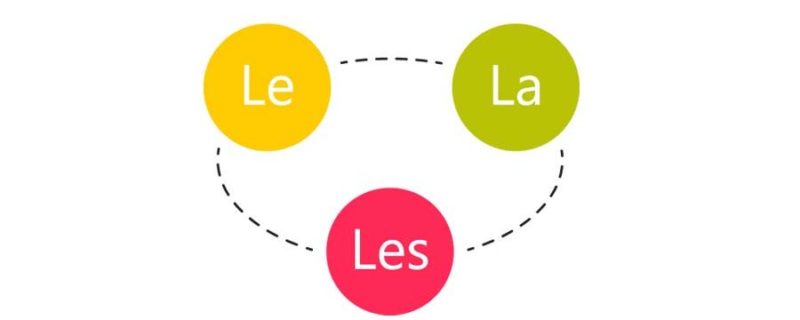
French doesn’t have to feel overwhelming here. Once you understand the three basic article families: definite, indefinite, and partitive which cover the whole language starts opening up. You begin to notice patterns. Sentences become clearer. And everyday situations like buying food, talking about your family, or describing your morning routine suddenly feel manageable.
In this guide, you’ll learn the most important A0–A1 rules for le / la / l’, un / une / des, and du / de la / de l’ — with simple examples, mini-stories, and decision charts you can actually use.
Want to hear these patterns in real French conversations?
Try OptiLingo free for 7 days and learn French the natural way through listening and speaking, not memorizing.
Table of Contents
- Why French Articles Feel Hard (and How to Make Them Easy)
- What Is an Article in French Grammar?
- Overview: The Three Types of French Articles
- Master Forms Table
- Definite Articles: le, la, l’, les
- Indefinite Articles: un, une, des
- Partitive Articles: du, de la, de l’, des
- Articles + Gender and Number
- Real A1 Situations: Which Article Do I Use?
- When French Uses No Article
- Mini Practice: Choose the Right Article
- Quick Summary + Cheat Sheet
- What to Do Next: Practise Articles in Real Sentences
- FAQs
- Keep Learning French Grammar
Why French Articles Feel Hard (and How to Make Them Easy)
If you’re learning French at an A0–A1 level, articles can feel confusing at first. English speakers often skip them entirely:
- “I like coffee.”
- “She bought apples.”
French is different. You need an article almost every time because the language marks:
- gender (masculine / feminine)
- number (singular / plural)
- specificity (the one we both know, a new one, or “some” amount)
The good news? At this level you only need to focus on three families:
- Definite articles → the
- Indefinite articles → a / an / some (countable)
- Partitive articles → some / a bit of (uncountable)
I still remember sitting in a café in Paris years ago, staring at the menu and wondering whether I should say un café, le café, or du café. If you’ve ever felt that tiny wave of panic, this guide is exactly the simplified map I wish someone had handed me.
You’ll see real examples, mini-stories, clear tables, and simple rules you can actually use. And if you want to hear these structures in natural spoken French, you can practise them inside OptiLingo (free 7-day trial).
What Is an Article in French Grammar?
An article is a small word that appears before a noun.
It tells you:
- whether the noun is masculine or feminine,
- whether it’s singular or plural,
- whether we’re talking about something specific, general, or just some amount of it.
Examples:
- le café (the coffee)
- un café (a coffee)
- du café (some coffee)
At A1, one of the best habits you can build is to learn nouns with their article:
- le livre (the book)
- la table (the table)
- les enfants (the children)
This simple step makes the rest of French grammar much easier.
Internal link suggestion: Learn more about noun gender in French: gender of French nouns
Overview: The Three Types of French Articles
French has three main article types. Once you understand these, most of A1 grammar becomes simple.
1. Definite articles → le, la, l’, les = “the”
2. Indefinite articles → un, une, des = “a, an, some (countable)”
3. Partitive articles → du, de la, de l’, des = “some, a bit of” (uncountable)
A0–A1 tip:
You can ignore rare exceptions. Just recognise the basic patterns and match them to everyday situations (ordering food, describing objects, introducing people).
Here’s the master table:
Master Forms Table
Type |
Masculine |
Feminine |
Before Vowel |
Plural |
Simple Example |
Definite |
le |
la |
l’ |
les |
le café (the coffee) |
Indefinite |
un |
une |
— |
des |
un livre (a book) |
Partitive |
du |
de la |
de l’ |
des |
du pain (some bread) |
Quick “Decision Cheat Sheet”
Ask yourself:
- Is it specific? → use definite
- Is it one new thing? → use indefinite
- Is it some amount (food/drink/material)? → use partitive
This logic covers almost everything you’ll face at A1.
Definite Articles: le, la, l’, les
Definite articles mean “the.”
Use them when both the speaker and listener know which thing you mean.
1) Specific things
- Le chien est dans le jardin.
The dog is in the garden. - La maison est grande.
The house is big.
2) General categories
- J’aime le café.
I like coffee.
In French, you use the definite article to talk about things in general — hobbies, foods, animals, and abstract ideas.
3) Days of the week (habits)
- Le lundi, je travaille.
On Mondays, I work.
4) Before vowel sounds → l’
- l’ami (the friend)
- l’école (the school)
More Examples
- Le café est sur la table. (The coffee is on the table.)
- Les livres sont ici. (The books are here.)
- L’enfant dort. (The child is sleeping.)
- J’adore la musique. (I love music.)
[AUDIO SLOW] [AUDIO NATURAL]
Try This
Choose le / la / l’ / les:
- ___ voiture
- ___ ordinateur
- ___ enfants
- ___ école
(Answers appear in the practice section.)
Indefinite Articles: un, une, des
Use indefinite articles for one new or unknown item, or some countable items.
1) One, not specific
- J’ai un chien.
I have a dog (not a specific one).
2) First mention in a story
- Elle achète une pomme.
She buys an apple.
3) Plural: des
- Nous avons des amis à Paris.
We have some friends in Paris.
Contrast With Definite Articles
- J’achète un café. → any coffee
- Je bois le café. → the specific one we already know
More Examples
- Un livre sur la table. (A book on the table.)
- Une voiture rouge. (A red car.)
- Des pommes fraîches. (Some apples.)
- J’ai une idée. (I have an idea.)
[AUDIO SLOW] [AUDIO NATURAL]
Try This
Fill in un / une / des:
- J’ai ___ chat.
- Elle veut ___ orange.
- Nous achetons ___ fleurs.
- Ils trouvent ___ maison.

Partitive Articles: du, de la, de l’, des
Partitive articles mean “some” or “a bit of.”
Use them with uncountable nouns such as:
- food
- drink
- materials
- abstract ideas
Forms
- du = de + le (masculine)
- de la (feminine)
- de l’ (vowel sound)
- des (plural “some of many”)
Key Examples
- Je mange du pain.
I’m eating some bread. - Je bois de la bière.
I’m drinking some beer. - Je prends de l’eau.
I’m having some water. - Il achète des légumes.
He’s buying some vegetables.
Negative Sentences (A1 version)
Articles usually become de or d’.
- Je ne veux pas de café.
- Il n’a pas de pain.
Use-Case Comparison Table
Meaning |
Definite (the) |
Partitive (some) |
Indefinite (a) |
Bread |
le pain |
du pain |
un pain (a loaf) |
[AUDIO SLOW] [AUDIO NATURAL]
Try This
Choose du / de la / de l’ / des / de:
- Je veux ___ sucre.
- Elle mange ___ fromage.
- Il boit ___ eau.
- Nous n’avons pas ___ fruits.
Articles + Gender and Number
Articles change depending on the gender and number of the noun.
Quick Table
Noun |
Singular |
Plural |
chien (dog) |
le chien / un chien |
les chiens / des chiens |
maison (house) |
la maison / une maison |
les maisons / des maisons |
ami / amie (friend) |
un ami, une amie |
des amis |
enfant (child) |
l’enfant |
les enfants |
A smart habit:
Learn nouns with their article from the beginning.
Internal link suggestion: see French adjectives, French pronouns, basic French vocabulary
Mini Drill
Choose the correct article, then write one short sentence:
- ___ amie
- ___ enfants
- ___ voiture
- ___ pain
Real A1 Situations: Which Article Do I Use?
You’ll learn much faster when articles appear inside real scenes.
Below are micro-stories with un / le / du, des / la / de la, and other article contrasts.
Scene 1: At a Café
- un café → a coffee (any coffee)
- le café → the specific coffee
- du café → some coffee (a bit / general drink)
Mini-Story
Je commande un café.
Le café arrive rapidement.
Je bois du café chaud et je me détends.
(I order a coffee. The coffee arrives quickly. I drink some hot coffee and relax.)
[AUDIO SLOW] [AUDIO NATURAL]
Scene 2: At the Market
- des pommes → some apples
- la pomme → the apple
- de la confiture → some jam
Mini-Story
Elle achète des pommes.
La pomme verte est sa préférée.
Elle veut aussi de la confiture.
(She buys some apples. The green apple is her favorite. She also wants some jam.)
[AUDIO SLOW] [AUDIO NATURAL]
Scene 3: Likes and Dislikes
- le fromage → cheese in general
- le café → coffee in general
- du café → some coffee (a bit)
Mini-Story
J’aime le fromage, mais je n’aime pas le café.
Mon ami prend du café tous les matins.
(I like cheese, but I don’t like coffee. My friend has some coffee every morning.)
[AUDIO SLOW] [AUDIO NATURAL]
Internal link suggestion: learn French grammar hub page.
When French Uses No Article
At A1, there are only a few safe moments where French drops the article completely.
1) Professions after être
- Je suis professeur. (I am a teacher.)
- Elle est médecin. (She is a doctor.)
2) A few fixed expressions
- à pied (on foot)
- par train (by train)
A0–A1 reassurance:
If you forget this rule, communication almost always survives.
The key exception you truly need to know is être + job.
Mini Practice: Choose the Right Article
Fill in le / la / les / un / une / des / du / de la / de l’ / de:
- ___ chien est petit.
- Je veux ___ eau.
- Elle achète ___ pommes.
- J’adore ___ musique.
- Je ne veux pas ___ sucre.
- Nous mangeons ___ pain.
- Il achète ___ voiture.
- ___ enfants jouent dehors.
[AUDIO]
Quick Summary + Cheat Sheet
Definite articles
- le, la, l’, les → the
Used for specific things or general categories.
Indefinite articles
- un, une, des → a / an / some (countable)
Used for new items or plural countable nouns.
Partitive articles
- du, de la, de l’, des → some / a bit of (uncountable)
Used for food, drink, materials.
Negative sentences
→ articles usually become de / d’
Feel free to print or save this section — it’s the kind of cheat sheet that makes grammar feel lighter.
What to Do Next: Practise Articles in Real Sentences
Grammar becomes automatic when you see and hear it inside real conversations.
Here’s a simple method:
- Open one OptiLingo French lesson.
- Write down 5 sentences you hear.
- Circle every article (le, la, un, une, du, des).
- Ask: “Why this article here?”
- Repeat in slow + natural audio.
With just ten minutes a day, you’ll start to feel the patterns instead of memorizing them.
👉 Start your free 7-day trial of OptiLingo to practise French articles with audio, mini-stories, and spaced repetition.
FAQs
1. What are the French articles?
French articles are small words before nouns that show gender, number, and specificity. They come in three families: definite (le, la, l’, les), indefinite (un, une, des), and partitive (du, de la, de l’, des).
2. How do I know when to use le, la, or les?
Use le (masc.), la (fem.), l’ (vowel), and les (plural) when referring to specific things or general categories (like foods, hobbies, or animals).
3. What is the difference between un / une and des?
Un / une are singular (“a, one”).
Des is plural (“some”) for countable nouns like apples, books, or friends.
4. When do I use partitive articles like du and de la?
Use them with uncountable nouns to express “some” or “a bit of”—typically foods, drinks, and materials.
5. Why do articles sometimes change to de or d’ in negative sentences?
In most negative sentences, French changes the article to de / d’.
Example: Je ne veux pas de café.
Using Articles to Signal Gender
While the form of the articles is determined by the gender of the noun they represent, the opposite is also true. If you ever want to concentrate on the gender of the noun, the best way to recognize it is to look at the article before it.
How to Learn and Use French Articles
The first step of learning the definite, indefinite, and partitive articles in French is to understand them. Know the difference in meaning to fully engage with these articles. Then, these top tips can help you further learn the use of French articles in everyday speech:
- Study articles in sentences: The best way to learn a language is to learn the most common phrases. Because that’s exactly how the locals speak. Seeing these articles in their natural environment is the best way to learn French.
- Conjugate articles yourself: It’s true, there are a lot more forms of articles in French than in English. The best way to learn the difference is to conjugate them yourself. When you’re writing or speaking French, make sure you always create “du” instead of “de la”. Soon, it’ll be like second nature.
- Say articles out loud: The only way to reach French fluency is to speak it. By practicing your pronunciation, you can truly get comfortable with the language. Say these articles out loud to practice them as much as possible. “Un” is an especially hard sound to make, give yourself time to master it.
Learn French Grammar Easily
The best way to learn French grammar is to not study it. That’s right, you don’t need to sit down with a book and drill the grammatical rules and exceptions of French. Instead, learn French grammar in a natural and fun environment. Use OptiLingo to start learning French grammar the right way.
OptiLingo is a language learning app that’s built to give you results. It gives you the most common French words and phrases, so you can learn the language naturally. And best of all, this app makes you speak the language too. Build your foreign language fluency and confidence while having fun. Download OptiLingo today to discover the benefits of French proficiency!
Additional Learning Resources