Learn Basic French Words and Phrases
French is an awesome language. If you’re traveling to France, you’ll know first hand. But, the French are really proud of their language. Before you travel, you should definitely learn the most basic French words and phrases to get by. You’ll navigate easier and receive better customer service if you speak a little bit of French. Luckily, it doesn’t take long to learn at all. Use this handy vocabulary list to learn the most common French words in less than 30 minutes, and start your journey to fluency.
I wrote this guide for absolute beginners, the kind of learner I used to be when I sat in a café abroad with a menu I could not read and a head full of random vocabulary that I could not use in a real sentence. Basic French should feel practical, not abstract.
With the right set of words, grouped by real situations, you can start speaking much faster than you think. You do not need 5,000 words to survive in France. You need a few hundred that you can actually use at the airport, in a café, at a hotel, in a shop, and in everyday small talk.
In this guide, you will learn 250 to 300 of the most useful basic French words and phrases for beginners. They are grouped by situation, with simple examples and tiny drills so you can start speaking out loud, not just memorizing lists.
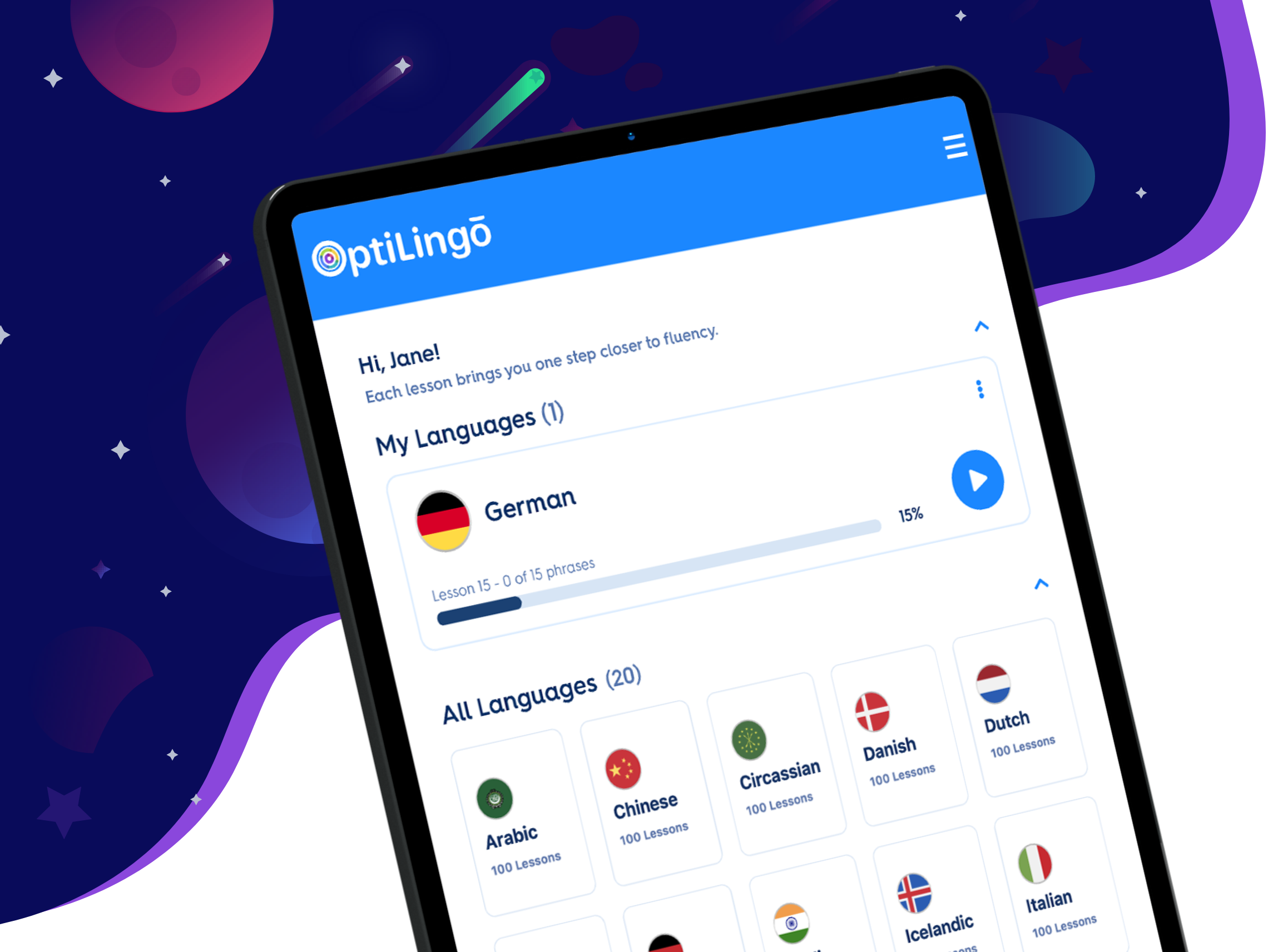
If you want to hear and review these words inside real dialogues, you can try OptiLingo free for 7 days and practise them with guided audio.
Common French Words for Beginners
Let’s dive right in with some of the most common French words and phrases.
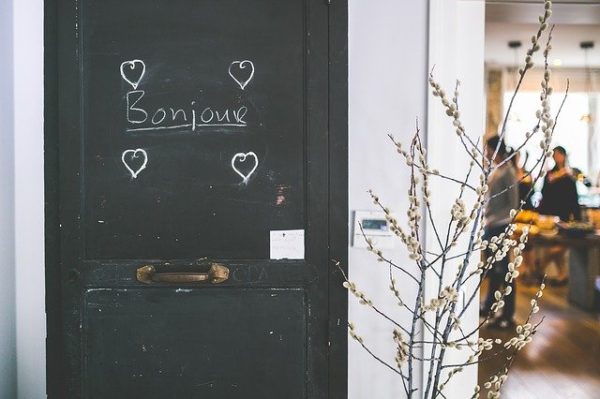
- Bonjour: a general greeting meaning “hello” or “good morning”
- Au revoir: goodbye
- Oui: yes
- Non: no
- Merci: thank you
- Merci beaucoup: thank you very much
- Fille: girl
- Garçon: boy
- Femme: woman
- Homme: man
- Amour: love
- Français: French
- S’il vous plaît: please (literally, “if you please”)
- Bonsoir: good evening
- Bonne nuit: good night
- Excusez-moi: excuse me
- De rien: a casual way of saying “you’re welcome”
- Je vous en prie: a formal way to say “you’re welcome”
- Temps: time
- Jour: day
- Monde: world
- Monsieur: mister or gentleman
- Raison: reason
- Mademoiselle: Miss, referring to an unmarried woman
- Madame: a married or older woman
- Beau: handsome
- Belle: beautiful
- Chat: cat
- Chien: dog
- Fort: strong

Table of Contents
- What You Will Learn Today
- How to Use This List
- Greetings and Polite Basics
- Small Talk and Introduction Phrases
- Numbers, Time and Days
- Getting Around: Directions and Transport
- Eating and Drinking
- Shopping and Money
- People, Feelings and Common Adjectives
- Handy Verbs and Connectors
- Emergency and Problem Phrases
- Mini Practice: Mix and Match
- What to Learn Next
- FAQs
What You Will Learn Today
In this guide, you will learn a curated set of 250 to 300 basic French words and phrases that you can use as a beginner. They are grouped by real-life situations:
- greetings and polite basics
- small talk and introductions
- numbers, time and days
- directions and transport
- eating and drinking
- shopping and money
- people, feelings and useful adjectives
- the most important verbs and connectors
- emergency and problem phrases
Think of this as your travel survival kit plus a starter toolkit for simple conversations. You will also see short example sentences and micro-drills so you can practise speaking out loud.
You can hear and review these words inside full dialogues with slow and natural audio in the OptiLingo app. Try it free for 7 days if you want to build listening and speaking skills at the same time.
How to Use This List
Do not try to learn everything in one sitting. Instead:
- Choose one category at a time (for example: greetings).
- Read the word cards and say the examples out loud.
- Practise 10 to 15 words until they feel comfortable.
- Come back later and review, then move to the next category.
If you like printed resources, imagine this article as the basis for a Top 100 Basic French Words PDF cheat sheet that you can download and keep on your phone or in your travel bag. A simple one-page summary can help you review before a trip or while waiting at the airport.
Greetings and Polite Basics
These words let you say hello, goodbye, please and thank you in almost any situation.
Word cards:
- Bonjour → hello, good morning / afternoon; interjection
Bonjour, comment ça va ? → Hello, how are you?
Note: neutral greeting used until late afternoon. - Salut → hi, bye; interjection
Salut, à demain ! → Hi, see you tomorrow.
Note: informal, friends and family. - Bonsoir → good evening; interjection
Bonsoir, vous avez une réservation ? → Good evening, do you have a reservation?
Note: use in the evening. - Bonne nuit → good night; phrase
Bonne nuit, à demain. → Good night, see you tomorrow.
Note: said before going to sleep. - Au revoir → goodbye; phrase
Merci, au revoir. → Thank you, goodbye.
Note: standard polite goodbye. - À bientôt → see you soon; phrase
À bientôt, j’espère. → See you soon, I hope. - À plus tard → see you later; phrase
À plus tard, merci. → See you later, thanks.
Note: informal to neutral. - S’il vous plaît → please (formal); phrase
Un café, s’il vous plaît. → A coffee, please.
Note: with vous, polite or formal. - S’il te plaît → please (informal); phrase
Ferme la porte, s’il te plaît. → Close the door, please.
Note: with tu, friends and kids. - Merci → thank you; interjection
Merci pour votre aide. → Thank you for your help. - Merci beaucoup → thank you very much; phrase
Merci beaucoup pour tout. → Thank you very much for everything. - De rien → you are welcome; phrase
Merci pour le café. De rien. → Thanks for the coffee. You are welcome. - Je vous en prie → you are very welcome; phrase
Je vous en prie, avec plaisir. → You are welcome, my pleasure.
Note: slightly more formal. - Excusez-moi → excuse me (formal); phrase
Excusez-moi, où sont les toilettes ? → Excuse me, where is the bathroom? - Pardon → sorry, excuse me; interjection
Pardon, je suis désolé. → Sorry, I am sorry. - Comment ça va ? → how is it going?; phrase
Salut, comment ça va ? → Hi, how is it going? - Ça va bien → I am fine; phrase
Ça va bien, merci. → I am fine, thank you. - Enchanté / Enchantée → nice to meet you; adjective used as phrase
Enchanté, je m’appelle Paul. → Nice to meet you, my name is Paul.
Note: add e for feminine.
Mini drill: greeting dialogues
- Bonjour, comment ça va ?
Ça va bien, merci. Et vous ? - Bonsoir, vous avez une réservation ?
Oui, au nom de Martin. - Salut, à plus tard. À bientôt.
Small Talk and Introduction Phrases
Use these to introduce yourself, ask basic questions, and survive small talk.
- Je m’appelle … → my name is …; phrase
Je m’appelle Emma. → My name is Emma. - Comment vous appelez-vous ? → what is your name? (formal); phrase
Bonjour, comment vous appelez-vous ? → Hello, what is your name? - Comment tu t’appelles ? → what is your name? (informal); phrase
Et toi, comment tu t’appelles ? → And you, what is your name? - Je viens des États-Unis → I am from the United States; sentence
Je viens des États-Unis, de New York. → I am from the United States, from New York. - Je suis américain / américaine → I am American; sentence
Je suis américaine, et toi ? → I am American, and you? - Je suis en vacances → I am on vacation; sentence
Je suis en vacances à Paris. → I am on vacation in Paris. - Je travaille à … → I work at …; sentence
Je travaille à Chicago. → I work in Chicago. - Je parle un peu français → I speak a little French; sentence
Je parle un peu français, mais je fais des erreurs. → I speak a little French, but I make mistakes. - Je ne parle pas bien français → I do not speak French well; sentence
Je ne parle pas bien français, mais j’essaie. → I do not speak French well, but I try. - Je ne comprends pas → I do not understand; sentence
Pardon, je ne comprends pas. → Sorry, I do not understand. - Parlez-vous anglais ? → do you speak English?; phrase
Excusez-moi, parlez-vous anglais ? → Excuse me, do you speak English? - Répétez, s’il vous plaît → repeat, please; phrase
Répétez, s’il vous plaît, plus lentement. → Repeat, please, more slowly. - Quel âge as-tu ? → how old are you? (informal); phrase
Quel âge as-tu ? → How old are you? - Où habites-tu ? → where do you live? (informal); phrase
Et toi, où habites-tu ? → And you, where do you live? - Je suis content d’être ici → I am happy to be here; sentence
Je suis content d’être ici en France. → I am happy to be here in France.
Mini drill: answer intro questions
Answer out loud:
- Comment tu t’appelles ?
- Tu viens d’où ?
- Tu parles français ?
Give simple answers like:
Je m’appelle… Je viens des États-Unis. Je parle un peu français.
Numbers, Time and Days
You do not need every number on day one, but you should know the basics for prices, times and dates.
Core numbers
- zéro → zero
- un, deux, trois → one, two, three
- quatre, cinq, six → four, five, six
- sept, huit, neuf → seven, eight, nine
- dix → ten
- vingt → twenty
- trente → thirty
- quarante → forty
- cinquante → fifty
Example:
Le bus arrive dans dix minutes. → The bus arrives in ten minutes.
La chambre coûte vingt euros. → The room costs twenty euros.
Time words
- l’heure → hour, o’clock; noun (f)
Il est trois heures. → It is three o’clock. - la minute → minute; noun (f)
Attendez cinq minutes. → Wait five minutes. - aujourd’hui → today; adverb
Aujourd’hui, je visite le musée. → Today, I am visiting the museum. - demain → tomorrow; adverb
On part demain matin. → We leave tomorrow morning. - hier → yesterday; adverb
Hier, il a plu. → Yesterday, it rained. - le matin → morning
- l’après-midi → afternoon
- le soir → evening
- la nuit → night
Days of the week
- lundi → Monday
- mardi → Tuesday
- mercredi → Wednesday
- jeudi → Thursday
- vendredi → Friday
- samedi → Saturday
- dimanche → Sunday
Example:
Je travaille lundi et mardi. → I work on Monday and Tuesday.
Months (selected basics)
- janvier → January
- février → February
- mars → March
- avril → April
- mai → May
- juin → June
- juillet → July
- août → August
- septembre → September
- octobre → October
- novembre → November
- décembre → December
Example:
En janvier, il fait froid. → In January, it is cold.
Micro drill
Say the current day and date out loud:
Aujourd’hui, nous sommes [day] [date] [month]
see numbers in French and French pronunciation guide
Getting Around: Directions and Transport
These words help you ask for directions and navigate trains, buses and metros.
- à gauche → to the left; phrase
Tournez à gauche au feu. → Turn left at the light. - à droite → to the right; phrase
Le musée est à droite. → The museum is on the right. - tout droit → straight ahead; phrase
Continuez tout droit. → Go straight ahead. - près → near; adjective/adverb
C’est près d’ici. → It is near here. - loin → far; adjective/adverb
Ce n’est pas très loin. → It is not very far. - la gare → train station; noun (f)
Où est la gare, s’il vous plaît ? → Where is the train station, please? - la station de métro → metro station; noun (f)
La station de métro est là-bas. → The metro station is over there. - l’arrêt de bus → bus stop; noun (m)
L’arrêt de bus est devant l’hôtel. → The bus stop is in front of the hotel. - le taxi → taxi; noun (m)
Je prends un taxi pour l’aéroport. → I am taking a taxi to the airport. - l’aéroport → airport; noun (m)
L’aéroport est loin du centre-ville. → The airport is far from downtown. - le billet → ticket; noun (m)
Je voudrais un billet pour Lyon. → I would like a ticket to Lyon. - aller simple → one-way ticket; phrase
Un aller simple, s’il vous plaît. → A one-way ticket, please. - aller-retour → round trip; phrase
Un aller-retour Paris Lyon. → A round trip Paris Lyon. - le quai → platform; noun (m)
Le train part du quai 4. → The train leaves from platform 4. - le plan → map; noun (m)
Avez-vous un plan de la ville ? → Do you have a map of the city? - l’adresse → address; noun (f)
Voici mon adresse. → Here is my address.
Mini drill: ask the way
Practise saying:
- Excusez-moi, où est la gare, s’il vous plaît ?
- Pardon, comment aller à l’aéroport ?
- Le centre-ville est près d’ici ou loin ?
Eating and Drinking
Food vocabulary is some of the most motivating for beginners.
- de l’eau → water; noun (f)
Je voudrais de l’eau, s’il vous plaît. → I would like some water, please. - un café → a coffee; noun (m)
Un café, s’il vous plaît. → A coffee, please. - un thé → a tea; noun (m)
Un thé au citron, merci. → A lemon tea, thank you. - du vin → wine; noun (m)
Du vin rouge ou blanc ? → Red wine or white? - une bière → a beer; noun (f)
Une bière pression, s’il vous plaît. → A draft beer, please. - le pain → bread; noun (m)
Le pain est très bon ici. → The bread is very good here. - le fromage → cheese; noun (m)
J’adore le fromage français. → I love French cheese. - la viande → meat; noun (f)
Je ne mange pas de viande. → I do not eat meat. - le poisson → fish; noun (m)
Le poisson est frais. → The fish is fresh. - je suis végétarien / végétarienne → I am vegetarian; sentence
Je suis végétarienne, s’il vous plaît. → I am vegetarian, please. - le petit déjeuner → breakfast; noun (m)
Le petit déjeuner est inclus. → Breakfast is included. - le déjeuner → lunch; noun (m)
Le déjeuner est à midi. → Lunch is at noon. - le dîner → dinner; noun (m)
Nous avons le dîner à huit heures. → We have dinner at eight. - le menu / la carte → menu; noun (m/f)
La carte, s’il vous plaît. → The menu, please. - le plat → main dish; noun (m)
Quel est le plat du jour ? → What is today’s special? - l’addition, s’il vous plaît → the bill, please; phrase
Excusez-moi, l’addition, s’il vous plaît. → Excuse me, the bill, please. - un serveur / une serveuse → waiter / waitress; noun
Le serveur est très sympa. → The waiter is very nice. - c’est délicieux → it is delicious; phrase
Merci, c’est délicieux. → Thank you, it is delicious. - une table pour deux → a table for two; phrase
Bonjour, une table pour deux personnes. → Hello, a table for two people.
Mini drill: order a meal
Say this out loud:
Bonjour, une table pour deux, s’il vous plaît. Un café et de l’eau, s’il vous plaît. Comme plat, je prends le poisson. L’addition, s’il vous plaît.
see French travel phrases and French greetings and phrases
Shopping and Money
These words help you buy clothes, food and souvenirs.
- le magasin → shop, store; noun (m)
Le magasin ouvre à dix heures. → The shop opens at ten. - le supermarché → supermarket; noun (m)
Il y a un supermarché près d’ici. → There is a supermarket near here. - le marché → market; noun (m)
J’adore le marché du dimanche. → I love the Sunday market. - essayer → to try on; verb
Puis-je l’essayer ? → May I try it on? - la taille → size; noun (f)
Vous avez cette chemise en taille M ? → Do you have this shirt in size M? - le prix → price; noun (m)
Quel est le prix de ce pull ? → What is the price of this sweater? - bon marché → cheap, inexpensive; adjective
C’est bon marché pour Paris. → It is cheap for Paris. - cher / chère → expensive; adjective
C’est trop cher pour moi. → It is too expensive for me. - combien ça coûte ? → how much does it cost?; phrase
Excusez-moi, combien ça coûte ? → Excuse me, how much does it cost? - la réduction → discount; noun (f)
Vous faites une réduction ? → Do you offer a discount? - ouvert / ouverte → open; adjective
Le magasin est ouvert aujourd’hui. → The shop is open today. - fermé / fermée → closed; adjective
Le restaurant est fermé le lundi. → The restaurant is closed on Monday. - en espèces → in cash; phrase
Je paie en espèces. → I am paying in cash. - par carte → by card; phrase
Je peux payer par carte ? → Can I pay by card? - la carte bancaire → bank card; noun (f)
J’ai perdu ma carte bancaire. → I have lost my bank card. - le reçu → receipt; noun (m)
Puis-je avoir un reçu, s’il vous plaît ? → Can I have a receipt, please?
Mini drill
Practise:
- Combien ça coûte ?
- C’est un peu cher pour moi.
- Vous avez une taille plus grande ?
People, Feelings and Common Adjectives
These words help you describe people and simple situations.
- un homme → a man; noun (m)
Cet homme est très gentil. → That man is very kind. - une femme → a woman; noun (f)
Cette femme travaille ici. → This woman works here. - un garçon → a boy; noun (m)
Le garçon est content. → The boy is happy. - une fille → a girl; noun (f)
La fille est très sympa. → The girl is very friendly. - un ami / une amie → friend; noun
Il a un ami à Paris. → He has a friend in Paris. - la famille → family; noun (f)
Ma famille habite aux États-Unis. → My family lives in the United States. - content / contente → happy, glad; adjective
Je suis très content aujourd’hui. → I am very happy today. - triste → sad; adjective
Elle est un peu triste. → She is a little sad. - fatigué / fatiguée → tired; adjective
Je suis un peu fatigué ce soir. → I am a little tired tonight. - occupé / occupée → busy; adjective
Je suis désolé, je suis occupé. → I am sorry, I am busy. - froid → cold; adjective
J’ai froid. → I am cold. - chaud → hot, warm; adjective
J’ai chaud. → I am hot. - grand / grande → tall, big; adjective
Ce bâtiment est très grand. → This building is very big. - petit / petite → small, short; adjective
C’est un petit village. → It is a small village. - beau / belle → beautiful; adjective
C’est une belle ville. → It is a beautiful city. - sympa → nice, friendly; adjective
Les gens ici sont très sympas. → People here are very friendly. - gentil / gentille → kind; adjective
Merci, vous êtes très gentil. → Thank you, you are very kind. - facile → easy; adjective
C’est facile. → It is easy. - difficile → difficult; adjective
Le français est difficile, mais intéressant. → French is difficult but interesting.
Mini drill: describe yourself and a friend
Say two sentences:
- Je suis [adjective].
- Mon ami est [adjective].
For example:
Je suis fatigué, mais content. Mon ami est très sympa
see express your feelings in French
Handy Verbs and Connectors
These are the verbs and little words that glue sentences together.
Core verbs
- être → to be
Je suis ici pour deux jours. → I am here for two days. - avoir → to have
Nous avons une réservation. → We have a reservation. - aller → to go
Nous allons au restaurant. → We are going to the restaurant. - faire → to do, to make
Qu’est-ce que vous faites ici ? → What are you doing here? - vouloir → to want
Je veux un café. → I want a coffee. - pouvoir → can, to be able to
Je peux vous aider. → I can help you. - devoir → must, to have to
Je dois partir. → I have to leave. - aimer → to like, to love
J’aime beaucoup cette ville. → I really like this city. - préférer → to prefer
Je préfère le vin rouge. → I prefer red wine. - comprendre → to understand
Je ne comprends pas. → I do not understand. - savoir → to know (a fact, how to)
Je ne sais pas. → I do not know. - acheter → to buy
J’achète des souvenirs. → I am buying souvenirs. - manger → to eat
Nous mangeons au restaurant. → We are eating at the restaurant. - boire → to drink
Je bois de l’eau. → I am drinking water. - venir → to come
Je viens de Chicago. → I come from Chicago. - voir → to see
Je vois la gare d’ici. → I can see the station from here. - parler → to speak
Je parle un peu français. → I speak a little French.
Connectors and adverbs
- et → and
- mais → but
- ou → or
- parce que → because
- très → very
- un peu → a little
- peut-être → maybe
- aussi → also
- toujours → always
- souvent → often
- jamais → never
Example:
Je suis fatigué, mais très content, parce que je suis en vacances. → I am tired but very happy because I am on vacation
Emergency and Problem Phrases
These are important for safety and peace of mind.
- au secours → help; interjection
Au secours, quelqu’un est blessé. → Help, someone is hurt. - à l’aide → help; interjection
À l’aide, s’il vous plaît. → Help, please. - J’ai besoin d’aide → I need help; sentence
Excusez-moi, j’ai besoin d’aide. → Excuse me, I need help. - J’ai perdu … → I have lost …; sentence
J’ai perdu mon passeport. → I have lost my passport. - Je suis perdu / perdue → I am lost; sentence
Je suis perdu, pouvez-vous m’aider ? → I am lost, can you help me? - Appelez la police → call the police; phrase
S’il vous plaît, appelez la police. → Please call the police. - Appelez une ambulance → call an ambulance; phrase
Vite, appelez une ambulance. → Quickly, call an ambulance. - C’est une urgence → it is an emergency; sentence
C’est une urgence, s’il vous plaît. → It is an emergency, please. - l’hôpital → hospital; noun (m)
Je dois aller à l’hôpital. → I need to go to the hospital. - la pharmacie → pharmacy; noun (f)
Où est la pharmacie la plus proche ? → Where is the nearest pharmacy? - J’ai mal… → I have pain…; sentence starter
J’ai mal à la tête. → I have a headache.
J’ai mal au ventre. → I have a stomach ache.
Mini drill: emergency dialogues
- Excusez-moi, j’ai besoin d’aide. Je suis perdu.
- Appelez une ambulance, s’il vous plaît. C’est une urgence.
Mini Practice: Mix and Match
Now let us combine words from different categories. Answer each prompt out loud using any words from this guide.
- Greeting + introduction
You meet someone at a café. Say hello, give your name and where you are from.
For example:
Bonjour, je m’appelle Anna. Je viens des États-Unis. Je suis en vacances. - Ask for the bill in a restaurant
You are finished eating. Call the server and ask politely for the bill.
For example:
Excusez-moi, l’addition, s’il vous plaît. Merci beaucoup. - Ask directions to a station
You are lost and you need the train station.
For example:
Excusez-moi, où est la gare, s’il vous plaît ? C’est loin d’ici ? - Buy a ticket
You are at the station and want a round trip ticket to Lyon.
Bonjour, un billet aller-retour pour Lyon, s’il vous plaît. Combien ça coûte ? - Describe how you feel
You are tired but happy to be on vacation.
Je suis un peu fatigué, mais très content, parce que je suis en vacances.
Say each answer out loud two or three times. Change small details each time, such as your name, city or destination, so your brain learns patterns, not just fixed phrases.
What to Learn Next
Now that you know these basic French words, the next step is to practise them inside real sentences and short dialogues. Vocabulary becomes much easier to remember when it appears in context, with real voices and real situations.
Here are a few good next steps:
- learn the alphabet in French so you can spell names and addresses
- review a French pronunciation guide to improve your accent
- work through numbers in French to handle prices and times
- study French greetings and phrases for everyday situations
- explore French travel phrases if you are going abroad
If you prefer a guided path, the OptiLingo app walks you through high frequency words and phrases in short daily lessons with slow and natural audio.
Ready to use these basic French words in real life?
Start your 7 day free trial of OptiLingo and practise them inside real conversations.
FAQs
1. How many French words do I need to start speaking?
You can start simple conversations with 250 to 500 words if they are the right words and you practise them in real sentences. This article already gives you a strong base of travel and everyday vocabulary.
2. What are the most useful basic French greetings?
The most useful greetings are Bonjour (hello), Salut (hi, informal), Bonsoir (good evening), Au revoir (goodbye), and polite phrases like Merci (thank you) and S’il vous plaît (please). With these, you can be polite in almost any situation.
3. Do I need to learn formal vs informal (tu / vous) right away?
It helps to know the difference. Use vous with strangers, older people and in formal situations. Use tu with friends, family and children. As a beginner, if you are unsure, vous is the safer choice.
4. How can I practise these words on my own?
Read them out loud, write simple sentences, and use shadowing. Listen to audio, repeat after the speaker and try to copy rhythm and pronunciation. Recording yourself is very useful, even if it feels strange at first.
5. Which basic French words should I learn for travel?
Priority words for travel include greetings, numbers, days, food and drink words, directions, transport terms, shopping vocabulary and a few emergency phrases like J’ai besoin d’aide and C’est une urgence. Those alone can carry you through many situations.
French Grammar: The Basics
Grammar is the boogeyman of language learning. Nobody likes it. But, it’s important to be familiar with the most basic rules, so you can start forming sentences in French quickly. With the useful French vocabulary you now have, you’re only steps away from fluency.
- Nouns Have Genders: In French, nouns are either feminine or masculine. These French genders affect a lot of grammatical rules. You need to conjugate adjectives and articles in French to fit the gender and number of the noun. For “the”, the French have “le” (masculine), “la” (feminine), and “les” (plural). For the English “a” and “an”, the French use “un” (masculine) and “une” (feminine).
- Verbs Conjugate Differently: In English, verbs in the present tense have only two forms. For example talk and talks. Meanwhile, in French, you have to conjugate verbs up to six different ways to fit the pronoun.
- Adjectives come after the noun: In English, the adjective is placed before the noun. But, in French, the adjective is often found after the noun. Note that this is true often, but not always. Adjectives describing beauty, age, number, goodness, and size (or BANGS) come before the noun as an exception.
Tips For Learning Common French Words
Before you begin learning the most common French words, it’s good to know how you can study the best. Use this advice to guide your experience and maximize your language learning success.
- Use your trip as motivation: Motivation and enthusiasm are crucial to language learning success. And an upcoming trip is the perfect opportunity to motivate you. Build your excitement and your fluency at the same time.
- Review often: Once you’ve read these common French words and phrases and understood their meaning, make sure you review your material multiple times before you travel. This method is called spaced repetition, and it’s the best way to remember your language lessons.
- Don’t be afraid to speak: Speaking is the only way you’ll become fluent in French. Feel free to say these common French words out lout to get comfortable with the language. By the time you arrive to France, you’ll have no problem talking with the locals.
- Learn about French culture: French culture is incredibly rich in cultures and traditions. Learn a little bit about them before your trip, so you don’t commit faux pas.
Learn More Useful French Words and Phrases
Knowing these common French phrases will be extremely handy when you go to France. But, of course, there’s a lot more to the language. Perhaps this list was just the beginning of your language learning journey. If you want to learn the most useful phrases in the French language, you should try OptiLingo.
OptiLingo gives you the most high-frequency words and phrases in French. Forget about learning unnecessary vocabulary. This fun and effective method will make French more accessible than ever. Speak like a local with minimal study time. Discover how great learning French is by trying OptiLingo today!