
Written by Jonty Yamisha
Founder of OptiLingo · Language learner, entrepreneur, and lifelong student of how adults actually learn to speak
Author’s note
Welcome to the French Greetings guide. I have learned several languages as an adult. French was one of the first where I felt the emotional stakes immediately.
I remember walking into cafés, shops, offices, even elevators, and feeling a quiet tension. I knew words. I knew grammar rules. But I did not always know how to open my mouth.
Was bonjour enough? Was it too formal? Should I say salut? Should I ask how they were doing? And if they asked me back, what was I supposed to say without sounding stiff or strange?
Over time, I learned something important. French greetings are not about showing off vocabulary. They are about choosing a safe, appropriate phrase and delivering it calmly. You do not need many greetings. You need a few that work almost everywhere.
This guide reflects what I have learned through years of learning and teaching languages the hard way: start small, use high-frequency phrases, and practice them until they feel boring. Boring is good. Boring means automatic.
That philosophy runs through everything I build at OptiLingo and everything I teach about language learning.
Let’s make French greetings feel normal, not stressful.
What Are Common French Greetings?
Common French greetings include bonjour (hello), bonsoir (good evening), salut (hi or bye), au revoir (goodbye), bonne journée (have a good day), and comment ça va ? (how are you?). French greetings change by formality, time of day, and situation, but a few safe phrases work almost everywhere.
1) Why Greetings Matter In French
In French, greetings are not optional. They are the doorway to every interaction.
Skipping a greeting can feel abrupt or rude, even if your grammar is perfect. Choosing the wrong level of formality can feel awkward, even if your pronunciation is excellent. This is why many beginners feel nervous before they even speak.
The Cultural Weight Of Greetings
French culture treats greetings as social acknowledgment. Walking into a bakery without saying bonjour signals that you see the shopkeeper as invisible or unimportant. This is not about strict rules. It is about basic human recognition.
In English-speaking cultures, we often dive straight into transactions. “Can I get a coffee?” feels normal. In French contexts, that directness can feel cold. The greeting comes first, always.
This cultural difference trips up many beginners. You are not being rude intentionally. You are simply following patterns from your first language. Awareness fixes this instantly.
What You Actually Need
Here is the reassuring truth. You do not need dozens of phrases. A small set of greetings will carry you through most daily situations: shops, work, travel, meeting people, phone calls, and emails.
In this guide, you will learn:
- How to say hello naturally
- How to ask and answer “How are you?”
- How to say goodbye politely
- How to choose safe phrases when you are unsure
You can practice all of these phrases with real audio and repetition inside OptiLingo, which is how they actually stick.
2) How To Use This Guide
Read each section slowly. Say the phrases out loud, even if it feels awkward at first.
Pick two or three greetings for each situation. Do not try to memorize everything. Instead, choose:
- One safe formal greeting
- One neutral everyday greeting
- One informal greeting
These become your defaults. You do not need to improvise under pressure. You just reuse what works.
Once you choose your defaults, practice them with OptiLingo audio so your ear and mouth learn together.
The Power of Constraint
Having fewer options makes you faster and more confident. Decision fatigue is real, especially when speaking a new language. When you walk into a shop, your brain should not be debating greeting options. It should be on autopilot: bonjour.
This approach might feel limiting at first. In reality, it is liberating. Native speakers use the same greetings hundreds of times. Repetition is not a weakness. It is how language actually works.
3) Core French Greetings: hello and hi
These are the greetings you will hear most often.
French |
English |
Formality |
Typical context |
bonjour |
hello |
neutral to formal |
shops, work, strangers |
bonsoir |
good evening |
neutral to formal |
evenings |
salut |
hi |
informal |
friends, peers |
coucou |
hey |
very informal |
close friends |
rebonjour |
hello again |
neutral |
seeing someone twice |
bienvenue |
welcome |
neutral |
welcoming someone |
Important Notes
bonjour works almost everywhere during the day. This is your workhorse greeting. Use it liberally.
bonsoir is used in the evening, usually after work hours. The exact transition time is fuzzy. Around 6 PM is safe. If the sun is setting, bonsoir is appropriate.
salut is friendly but casual. Think of it like “hey” in English. You would not say “hey” to your boss in a formal meeting. Same rule applies here.
coucou is intimate and should be avoided with strangers. This is for close friends and children. Using it with a colleague or shopkeeper will feel very strange.
Choosing a Safe Default Greeting
If you remember nothing else from this section, remember this rule:
When in doubt, say bonjour.
Bonjour is the safest greeting in French. It works with strangers, colleagues, shop staff, hotel staff, and people you meet for the first time.
Early in my own learning, I wasted a lot of mental energy trying to optimize greetings. Should I sound friendlier? More casual? More local? That effort usually backfired.
Once I committed to bonjour as my default, conversations became calmer. French speakers responded warmly because I respected the social baseline. You can always loosen formality later. It is much harder to recover from starting too casual.
Think of greetings like traffic lights:
- Green light: bonjour
- Yellow light: bonsoir, salut
- Red light: coucou, unless you are very sure
The bonjour/bonsoir Boundary
Many beginners stress about when to switch from bonjour to bonsoir. Here is a practical guide:
- Morning through afternoon: bonjour
- After 5-6 PM: bonsoir becomes appropriate
- If you are unsure: notice what others are saying and match them
In practice, there is overlap. Someone might say bonjour at 5:30 PM. Someone else might say bonsoir at 4 PM in winter when it is already dark. Both are fine. French speakers are not judging you on this.
Micro dialogues
Entering a shop
- Bonjour.
- Bonjour.
Greeting the same person twice
- Bonjour.
- Bonjour.
- Rebonjour.
- Ah, rebonjour !
Greeting a friend
- Salut !
- Salut !
[AUDIO SLOW] [AUDIO NATURAL]
Try this
Choose the best greeting:
- A job interview
- A friend at a bar
- Your neighbor in the morning

4) How are You in French: Questions
French uses a small set of flexible patterns to ask “How are you?”
French |
English |
Formality |
Context |
Comment ça va ? |
How are you? |
neutral |
most situations |
Ça va ? |
How’s it going? |
informal |
friends |
Comment allez-vous ? |
How are you? |
formal |
work, strangers |
Ça va bien ? |
Doing well? |
neutral |
checking in |
Vous allez bien ? |
Are you well? |
formal |
polite check-in |
Comment tu vas ? |
How are you? |
informal |
friends |
Key Insight
Ça va is both a question and an answer. Intonation does the work.
- Rising tone: Ça va ? (How’s it going?)
- Flat tone: Ça va. (I’m okay.)
This simplicity is a gift. Use it.
When to Ask and When to Skip
Not every greeting requires “How are you?” Sometimes bonjour alone is perfectly sufficient.
In quick transactions (buying bread, asking for directions), bonjour is enough.
In social encounters (meeting a colleague, running into a neighbor), adding Comment ça va ? is natural.
In service situations (checking into a hotel, sitting down at a restaurant), staff might ask you first. Answer briefly and move to your need.
Reading the situation gets easier with practice. When in doubt, follow the other person’s lead. If they just say bonjour, respond with bonjour. If they ask how you are, answer and reciprocate.
The Formal Question: Comment allez-vous ?
This is the vous form of “How are you?” Use it in:
- Job interviews
- First meetings with professionals
- Speaking with elderly people you do not know
- Formal customer service situations
Comment allez-vous feels stiff in casual settings. Save it for situations where respect and distance are appropriate.
Most everyday situations use Comment ça va ? instead. It is warm without being overly familiar.
Try this
Which question fits?
- Talking to a colleague
- Talking to a close friend
- Talking to hotel staff
5) How to Answer: French Greeting Responses
You do not need dramatic answers. Polite and calm is perfect.
French |
English |
Tone |
Ça va bien. |
I’m doing well. |
positive |
Ça va. |
I’m okay. |
neutral |
Pas mal. |
Not bad. |
neutral |
Comme ci, comme ça. |
So-so. |
honest |
Je vais bien, merci. |
I’m well, thanks. |
polite |
Et toi ? |
And you? |
informal |
Et vous ? |
And you? |
formal |
Je suis fatigué mais ça va. |
Tired but okay. |
honest but polite |
Très bien. |
Very well. |
positive |
Bien, et toi ? |
Good, and you? |
neutral to positive |
Model Exchange
Comment ça va ?
Ça va bien, merci. Et toi ?
How honest should you be?
French responses balance honesty and restraint.
With strangers, stay neutral.
With colleagues, lightly positive.
With friends, honest but brief.
This balance took me time to learn. Coming from a culture where enthusiasm is often exaggerated, I initially sounded overly upbeat. Neutral responses felt strange at first, but they felt natural very quickly.
The reciprocal question
Almost always ask back. This is a key part of French greeting culture.
Ça va bien, merci. Et toi ? (informal)
Je vais bien, merci. Et vous ? (formal)
Asking back shows you care about the other person. Stopping after your answer can feel self-centered. The reciprocal question takes one second and makes a big difference.
When you actually feel bad
You do not need to lie, but context matters.
With a cashier: Stick to neutral. “Ça va” is fine even if your day is terrible.
With a colleague: Light honesty is okay. “Pas mal, un peu fatigué” (Not bad, a bit tired) acknowledges reality without burdening them.
With a friend: Real honesty. “Ça va pas super, j’ai eu une journée difficile” (Not great, I had a hard day) opens real conversation.
Try this
Choose the best response:
- You slept poorly, talking to a cashier
- You feel great, talking to a colleague
- You feel tired, talking to a friend
6) Goodbye in French: Basic Farewells
French goodbyes often include a closing wish.
French |
English |
Formality |
When to use |
au revoir |
goodbye |
neutral to formal |
everywhere |
salut |
bye |
informal |
friends |
à bientôt |
see you soon |
neutral |
future meeting |
à plus tard |
see you later |
informal |
friends |
à demain |
see you tomorrow |
neutral |
next day |
bonne journée |
have a good day |
neutral |
daytime exits |
bonne soirée |
have a good evening |
neutral |
evening exits |
bonne nuit |
good night |
neutral |
bedtime |
à tout à l’heure |
see you later (same day) |
neutral |
same-day meetings |
bon après-midi |
have a good afternoon |
neutral |
afternoon exits |
Short Dialogues
Leaving a shop
- Au revoir, bonne journée.
- Merci, bonne journée.
Ending a call
- Au revoir.
- Au revoir.
Timing and etiquette
Goodbyes matter. Ending a conversation abruptly can feel cold.
Pairing au revoir with bonne journée or bonne soirée softens the exit and signals consideration. This small habit made a big difference in how my interactions were received early on.
The daytime farewell: bonne journée
Use this from morning through late afternoon. It means “have a good day” and functions like a warm send-off.
You can use it when leaving or when someone else is leaving. Shop staff will often say it to you. Say it back. The exchange creates a pleasant closing moment.
The evening farewell: bonne soirée
This takes over from bonne journée sometime in the late afternoon or evening. The transition is fuzzy, similar to bonjour/bonsoir.
Use bonne soirée:
- When leaving work
- When leaving a restaurant after dinner
- When saying goodnight to someone who is not going to bed yet
The bedtime farewell: bonne nuit
This is specifically for bedtime. Do not use it when leaving a shop at 7 PM. Use it when someone is actually going to sleep.
Common situations:
- Saying goodnight to family
- Ending a late phone call
- Leaving a friend’s house late at night
À bientôt and its variations
À bientôt means “see you soon” and works when you expect to see someone again relatively soon.
À plus tard is more casual and means “see you later,” often used among friends.
À demain is specific: “see you tomorrow.” Use it when you know you will see someone the next day.
À tout à l’heure means “see you in a bit” and is used when you will see someone later the same day.
Try this
Choose the best goodbye:
- Leaving a café at noon
- Leaving a friend late at night
- Ending a work meeting

6.5) Common Greeting Mistakes Beginners Make
These mistakes are very common.
Mistake 1: Skipping the Greeting
Walking into a shop without saying bonjour can feel rude, even if unintentional.
I made this mistake constantly at first. I would walk in, focused on what I needed, and launch straight into my question. The response was often chilly. Once I started greeting first, everything changed.
The habit is simple: cross a threshold, say bonjour. Every time. Even if you are just walking in to ask a quick question.
Mistake 2: Using Salut too Early
Salut assumes familiarity. Use it only when the setting is clearly informal.
I once said salut to a doctor during an appointment. The energy shifted immediately. It was not offensive, but it was wrong. We were not friends. The distance matters.
Wait for clear signals before using salut with someone. If they use vous with you, do not use salut with them.
Mistake 3: Overthinking Pronunciation
A slightly imperfect bonjour is far better than silence.
Your accent will not be perfect at first. That is fine. French speakers care more about the effort than the execution. A respectful attempt beats silence every single time.
Say it wrong. Say it with an accent. Just say it.
Mistake 4: Forgetting to Respond
If someone says bonjour, always respond verbally.
Nodding or smiling is not enough in French culture. The greeting needs to be spoken. A quiet “bonjour” back is all it takes.
Mistake 5: Saying Bonjour Twice to the Same Person
French uses rebonjour for this. If you cross paths with someone again in the same day, say rebonjour, not bonjour again.
This is a small detail, but native speakers will notice it. Rebonjour shows you recognize the repeated encounter.
Awareness alone avoids most of these issues.
7) Polite Extras: please, nice to meet you, excuse me
These phrases often wrap around greetings.
French |
English |
s’il vous plaît |
please (formal) |
s’il te plaît |
please (informal) |
merci / merci beaucoup |
thank you / thank you very much |
de rien |
you’re welcome |
je vous en prie |
you’re welcome (formal) |
enchanté(e) |
nice to meet you |
excusez-moi |
excuse me (formal) |
pardon |
sorry / excuse me |
avec plaisir |
with pleasure |
pas de problème |
no problem |
Mini Dialogue
- Bonjour, excusez-moi, où est la gare ?
- Là-bas.
- Merci, bonne journée.
[AUDIO SLOW] [AUDIO NATURAL]
When to use enchanté
Enchanté (or enchantée for women) means “nice to meet you” and is used during introductions.
First meeting at a party:
- Bonjour, je m’appelle Jonty.
- Enchanté, moi c’est Marie.
You can also hear ravi(e) de vous rencontrer (delighted to meet you) in more formal situations, but enchanté covers most cases.
The two ways to say “you’re welcome”
De rien is casual and common. Use it with friends, peers, and everyday situations.
Je vous en prie is more formal and elegant. Use it in professional settings or when someone thanks you for something significant.
Both are correct. Choose based on the situation and the relationship.
8) Formal vs Informal: tu, vous, and body language
This causes anxiety for many learners. It does not need to.
Use vous when
- You do not know the person
- At work (until invited otherwise)
- In shops and hotels
- In official situations
- With people significantly older than you
- With authority figures
Use tu when
- With friends
- With family
- With children
- When invited to do so
- With peers in clearly informal settings
The invitation to switch
If someone says On peut se tutoyer ? (Can we use tu?), they are inviting informality. Say yes if you are comfortable.
Sometimes the switch happens naturally without asking. If a colleague starts using tu with you, you can reciprocate. This usually signals growing comfort and friendship.
A practical rule
Using vous too long is safer than switching too early. French speakers will guide you when the time is right.
In my experience, French people appreciate when foreigners err on the side of respect. You will never offend anyone by using vous too long. You can absolutely offend by using tu too early.
About la bise
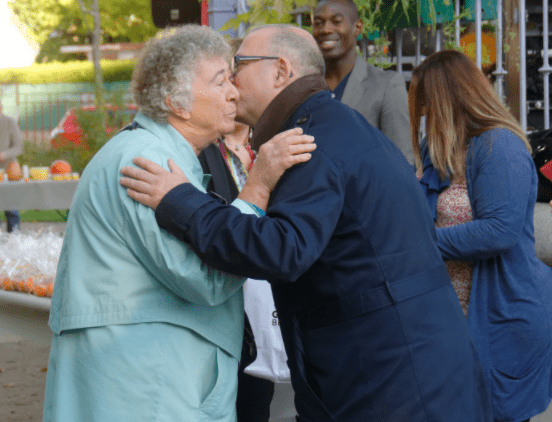
La bise is the cheek-kissing greeting. It varies by region (two kisses, three kisses, four kisses) and situation.
For beginners, here is my advice: let the other person lead. If they lean in, follow. If they extend a hand, shake hands. A verbal greeting is always safe.
Do not stress about la bise. It comes naturally once you spend time with French speakers. Until then, focus on verbal greetings.
9) Special Greetings: phone, email, holidays
Phone greetings
Answering:
- Allô ?
- Bonjour, ici Jonty.
Calling someone:
- Allô, bonjour.
- Je voudrais parler à…
- C’est de la part de qui ? (Who’s calling?)
Phone greetings are more abrupt than in-person greetings. Allô is unique to phone calls. Do not use it in person.
Email greetings
Formal:
- Bonjour Monsieur Dupont,
- Bonjour Madame,
- Madame, Monsieur, (when gender is unknown)
Neutral:
- Bonjour,
Closing:
- Cordialement, (Kind regards)
- Bien cordialement, (Best regards)
- Salutations distinguées, (Very formal)
French email culture is more formal than English. Start formal and wait for the other person to relax the tone.
Special occasions
French |
English |
Joyeux anniversaire |
Happy birthday |
Joyeux Noël |
Merry Christmas |
Bonne année |
Happy New Year |
Bonnes fêtes |
Happy holidays |
Bon week-end |
Have a good weekend |
Bonnes vacances |
Have a good vacation |
Bonne chance |
Good luck |
Félicitations |
Congratulations |
These replace standard greetings during the relevant occasion. On someone’s birthday, say Joyeux anniversaire instead of just bonjour.
Try this
Match the greeting:
- Phone call
- Formal email
- Birthday card
10) Mini Dialogues for Real Life
Entering a shop
- Bonjour.
- Bonjour.
- Ça va ?
- Ça va.
- Au revoir, bonne journée.
Meeting someone at a party
- Salut !
- Salut !
- Comment ça va ?
- Ça va bien, et toi ?
- À plus tard !
Checking into a hotel
- Bonjour.
- Bonjour.
- Comment allez-vous ?
- Très bien, merci.
- Au revoir, bonne soirée.
Running into a neighbor
- Bonjour !
- Bonjour !
- Ça va ?
- Ça va bien, et vous ?
- Très bien. Bonne journée !
- Merci, bonne journée !
Leaving work
- Bon, je vais y aller. (Well, I’m going to go.)
- D’accord, bonne soirée !
- Merci, toi aussi. À demain !
- À demain !
Answering the door
- Toc toc. (knock knock)
- Entrez ! (Come in!)
- Bonjour !
- Bonjour, entrez, entrez.
11) Practice: Build your Greeting Script
Choose one formal and one informal script.
Formal script
- Bonjour
- Comment allez-vous ?
- Je vais bien, merci
- Au revoir, bonne journée
Informal script
- Salut
- Ça va ?
- Ça va, et toi ?
- À plus tard
Say it aloud three times. Practice with OptiLingo audio if possible.
Your custom greeting script
Now build your own. Write down:
Three greetings you will actually use:
Two questions you feel comfortable asking:
Two ways you will say goodbye:
Commit these to memory. Use them until they feel boring. Boring means automatic.
12) Summary and Next Steps
French greetings are about confidence, not complexity.
Master a few safe phrases:
- bonjour / bonsoir
- comment ça va ?
- ça va
- au revoir / bonne journée
Use them daily. Hear them in context. Repeat them until they feel automatic.
The phrases in this guide will carry you through shops, offices, travel, meeting new people, and daily interactions. You do not need more greetings. You need these greetings practiced until they feel natural.
Language learning is not about collecting phrases. It is about using a small set of high-frequency phrases until they become reflexive. That is when real fluency begins.
👉 Start your 7 Day Free Trial of OptiLingo and practice French greetings, pronunciation, and real conversation patterns the way adults actually learn.
FAQs
What are the most common French greetings?
Bonjour, bonsoir, salut, au revoir, and bonne journée are the most common. Bonjour works in almost all situations during the day, making it the safest default greeting for beginners.
How do you say “How are you” in French?
Comment ça va ? and ça va ? are the most common forms. Comment ça va is neutral and works in most situations. Comment allez-vous is more formal and used with strangers or in professional settings.
How do you say goodbye in French politely?
Au revoir and bonne journée are polite and safe in most situations. Combine them for extra warmth: “Au revoir, bonne journée.” Use bonne soirée in the evening instead of bonne journée.
When should I use tu or vous in greetings?
Use vous with strangers, in formal situations, at work, and with people older than you. Use tu with friends, family, and children. When unsure, use vous—French speakers will invite you to switch to tu when appropriate.
What is a good French greeting for email or phone?
Bonjour works for both. For phone calls, use Allô when answering. In formal emails, use “Bonjour Monsieur” or “Bonjour Madame” followed by a comma.
Do I always need to say bonjour when entering a shop?
Yes. Walking into any shop, restaurant, or business without greeting the staff is considered rude in French culture. Always say bonjour when entering and au revoir when leaving, even for quick transactions.
What is the difference between bonne journée and bonne soirée?
Bonne journée means “have a good day” and is used during daytime until late afternoon. Bonne soirée means “have a good evening” and is used from late afternoon through evening. Both are used when saying goodbye.
Learn French with More Than Greetings
Learning these French greetings is the first step in learning French. It’s some of the most common forms of communication in a foreign language. And if you’d like to continue your journey with only the most useful French phrases, you need OptiLingo.
OptiLingo is a convenient language learning app that actually brings you results. Forget learning awkward and unnecessary vocabulary. Learn French and reach fluency quickly with only the essentials. OptiLingo focuses on the best methods to bring you an enjoyable language learning experience. Download the app today to discover how effective learning French can be!
Additional French Language Resources from Optilingo
10 Steps Guide to Learn French Easily
Romantic French Phrases for Beginners