Quick Summary
How to learn the French alphabet:
- 26 letters (A to Z) just like English
- Some letters sound different (R, U, E)
- Learn names + examples like A → ami (friend)
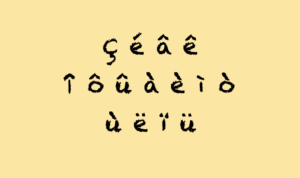
- Master accents (é, è, ç, ê)
- Practice combos (CH, GN, ON…)
- Say and spell your name in French!
1. Before We Start
I wrote this guide because I remember how it felt to sit there with a French textbook, staring at the word rouge and thinking: Why does everyone else sound like they’re gargling elegantly, and I sound like I’m choking on soup?
If you’ve ever felt that too, this one’s for you.
By the end of this lesson, you’ll know all 26 French letters, how they sound, how to use French accent marks, and how to spell your own name with confidence.
You’ll also see that learning pronunciation isn’t about talent. It’s about rhythm, attention, and repetition, and you can do it.
👉 Hear every letter inside real lessons. Try OptiLingo free for 7 days, that’s where you’ll hear the sounds click.
2. How the French Alphabet Works (A–Z Basics)
French and English share the same alphabet, but French treats its letters like living things.
Some breathe softly through the nose, others hum through the throat. A few, like R and U, will ask you to rewire your mouth completely.
French vowels (A, E, I, O, U, and sometimes Y) each have their own signature shape. Consonants are usually easier, though a handful (R, G, J, H) might need practice.
If this sounds intimidating, take it from someone who learned the hard way. Once you hear the difference and try saying it out loud, it becomes second nature. Really. I used to think my mouth just wasn’t built for French. Turns out, it just needed time.
For a deeper look, check out my French Pronunciation for Beginners guide.
3. The French Alphabet from A to Z
Letter |
French name |
Key sound (IPA) |
English approximation |
Example (FR) |
Meaning (EN) |
A |
a |
/a/ |
a in father |
ami |
friend |
B |
bé |
/b/ |
b in bat |
bateau |
boat |
C |
cé |
/k/ (before a/o/u) |
k in cat |
café |
coffee |
D |
dé |
/d/ |
d in dog |
dame |
lady |
E |
e (eu) |
/ə/ |
uh in sofa |
le |
the |
F |
effe |
/f/ |
f in fun |
fleur |
flower |
G |
gé |
/g/ (before a/o/u) |
g in go |
gare |
station |
H |
ache |
, (silent) |
, |
heure |
hour |
I |
i |
/i/ |
ee in see |
ici |
here |
J |
ji |
/ʒ/ |
s in “measure” |
jupe |
skirt |
K |
ka |
/k/ |
k in kite |
kilo |
kilo |
L |
elle |
/l/ |
l in love |
lait |
milk |
M |
emme |
/m/ |
m in man |
maman |
mom |
N |
enne |
/n/ |
n in no |
neuf |
nine |
O |
o |
/o/ |
o in go (pure) |
mot |
word |
P |
pé |
/p/ |
p in pen |
papa |
dad |
Q |
ku |
/k/ |
k in kite |
qui |
who |
R |
erre |
/ʁ/ |
back-of-throat “r” |
rouge |
red |
S |
esse |
/s/ |
s in sun |
soleil |
sun |
T |
té |
/t/ |
t in tea |
tasse |
cup |
U |
u |
/y/ |
say “ee” with rounded lips |
lune |
moon |
V |
vé |
/v/ |
v in van |
vin |
wine |
W |
double vé |
/w/ or /v/ |
w in “we” |
week-end |
weekend |
X |
iks |
/ks/ |
ks in box |
taxi |
taxi |
Y |
i grec |
/j/ or /i/ |
y in yes / ee |
yoga |
yoga |
Z |
zèd |
/z/ |
z in zoo |
zéro |
zero |
Quick note: C, G, and S can change sound depending on what follows them.
C turns into /s/ before e or i (cinq), G softens to /ʒ/ (girafe), and S can sound like /z/ between vowels (rose). You’ll get used to this rhythm over time, promise.
4. The 7 Trickiest French Letters (and How I Learned Them)
Every learner battles a few letters. Here are mine, and the small hacks that finally worked.
R /ʁ/
Ah, the French R. My old nemesis.
The trick? Don’t force it. It’s a gentle gargle in the back of your throat, almost like exhaling fog on a window. Say rouge softly, not from your tongue, but from your breath.
I spent weeks trying to mimic my French tutor’s R. One day, she said, “Stop trying to roll it. Just… breathe it.” That was it.
U /y/
If I could show you this one in person, I’d tell you to smile, then round your lips.
It’s not “oo” like in English; your tongue stays forward. Lune (moon), imagine saying “ee” with your lips puckered.
E /ə, e, ɛ/
French E wears many hats:
- é /e/ like café
- è /ɛ/ like père
- e (unstressed) /ə/ like le
This one took me weeks to “feel.” My advice: don’t overthink, just listen.
G vs J
Soft G (before E/I/Y) sounds like J in “beige”: gilet.
Hard G otherwise: gare.
And J? Always that soft /ʒ/ sound, jupe.
H
French H is quiet. It’s the guest who never speaks but changes the mood of the room.
L’homme (the man) glides together: [lɔm].
C
Before A/O/U it’s /k/ (café). Add a cedilla, ç, and it becomes /s/ (garçon).
S
A single S between vowels sounds like /z/ (rose). Double it (passe) to keep the hiss.
When I first realized that “S” could change personality mid-word, I laughed. French can be dramatic like that.
5. French Accents and When to Use Them
➡ See also French Accent Marks & Diacritics
Accents in French are like musical notes, small, but they change the entire melody. Ignore them, and you might say pere (nonsense) instead of père (father).
Accent |
Symbol |
IPA |
Example (FR) |
Meaning (EN) |
Tip |
Acute |
é |
/e/ |
café |
coffee |
closed “ay” sound |
Grave |
è |
/ɛ/ |
père |
father |
open “eh” sound |
Circumflex |
ê |
/ɛ/ or /ɔ/ |
fête |
party |
marks old spelling |
Diaeresis |
ë ï ü |
, |
Noël |
Christmas |
vowels pronounced separately |
Cedilla |
ç |
/s/ |
garçon |
boy |
softens C before a/o/u |
Learning accents used to feel impossible to me, until I realized it’s just about feeling how your face moves when you say each vowel. Try them in front of a mirror once. It’s awkward… and it works.
6. Common Letter Combos That Change Sound
These combos appear everywhere; once you recognize them, French reading becomes a game of patterns.
Combo |
IPA |
Example (FR) |
Meaning (EN) |
Note |
CH |
/ʃ/ |
chaud |
hot |
always “sh” |
GN |
/ɲ/ |
montagne |
mountain |
“ny” like canyon |
OU |
/u/ |
jour |
day |
like “oo” |
ON |
/ɔ̃/ |
nom |
name |
nasal vowel |
AN / EN |
/ɑ̃/ |
enfant |
child |
nasal vowel |
IN / IM |
/ɛ̃/ |
vin |
wine |
nasal vowel |
AI / EI |
/e/ or /ɛ/ |
lait |
milk |
usually /ɛ/ |
OI |
/wa/ |
moi |
me |
one of the most common sounds |
🗝️ Nasal vowels scared me at first, until I realized they’re not actually through the nose alone. It’s a mix of air through the nose and mouth. Say vin slowly and you’ll feel it hum in your face.
7. Mini Practice: Spell and Say
Let’s make this real.
1. Spell your name.
Say each letter in French, slowly. I still remember spelling “Jonty” as ji – o – enne – té – i grec. It felt like music.
2. Read these six words aloud:
café – fleur – lune – vin – garçon – Noël
3. Accent drill:
café, père, Noël, garçon.
If you do this once a day, I guarantee the alphabet will start to stick in your mouth, not just in your head.
Pronouncing the French Alphabet
Listening is a crucial part of language learning. Before you try to pronounce the letters of the French alphabet, get used to the sounds of the language. You can even slow the video down it you’d like. When you feel ready, go ahead and recreate the sounds you hear. You’ll improve your accent, and become fluent faster if you take your time and listen.
8. What to Learn Next
If you’ve made it this far, congratulations. You now know the entire French alphabet, plus the quirks that make it sing.
The next step? Let it move from your eyes to your ears.
You can explore:
- French Pronunciation for Beginners, how to shape your mouth and airflow
- French Accent Marks & Diacritics, a deeper look at é, è, ç, and more
- French Greetings & Basic Phrases, words that actually start conversations
- French Numbers (1–100), where spelling meets rhythm
- French Category Hub, your full beginner roadmap
👉 Ready to practice the alphabet with guided audio? Start your 7-day free Optilingo trial and hear how each sound blends into a real conversation.
FAQs
1. How many letters are in the French alphabet?
26, the same as English. But trust me, they sound alive in French.
2. Why does French U sound so different?
Because your tongue is forward and your lips are rounded. I practiced this one on the train once… got some looks, but it worked.
3. What are the main French accents and why do they matter?
They shift meaning and melody, é (closed) vs è (open). They’re the difference between polite and poetic.
4. Is the French R rolled?
No, it’s a throat sound, not a Spanish roll. Think soft gargle, not motorcycle engine.
5. Which letter combos change sound?
CH /ʃ/, GN /ɲ/, ON /ɔ̃/, AN/EN /ɑ̃/, IN/IM /ɛ̃/, AI/EI /ɛ/. Once you see them, you can almost hear the word before saying it.
Keep Learning
If you enjoyed this, you’ll love what comes next:
- French Pronunciation for Beginners
- Best Way to Learn French
- 10 Most Beautiful French Words
- Essential French Phrases for Travel
- French Category Hub
Every learner starts with the alphabet. What matters is that you started and that you keep going.
Master the Franch Language Fast
Learning the French alphabet is the first step of this exciting journey. Soon you’ll be able to fluently talk to French locals. And if you want to get there fast, OptiLingo can help.
OptiLingo is a language learning app that brings you results. Built on scientifically-proven methods, this effective technology will get you speaking French fast. By combining spaced repetition with comprehensible input, you won’t just understand your lessons, you’ll also commit them to memory successfully. And most importantly, you’ll practice your speaking skills from day 1. This means that your fluency is closer than you think. Try OptiLingo today for free to discover how effective it is!
Written by Jonty Yamisha
Founder of OptiLingo | Language learner | Proud son of immigrants who still believes language is the most human thing we share.